

Piston Valves
Westbury stated: “Flat slide valves, which have been used in some high speed engines, are generally regarded nowadays as quite out of the question for high pressure, but piston valves do not always provide perfect pressure balance as they should do. The fitting of the valve is highly important – the margin between excessive tightness and leakage is very small indeed and either extreme will result in a loss of efficiency.”
Stuart’s recognized this issue in the mid 1920s which led to the evolution of this range in piston valve engines.
Star

Figure 13: The Star
The Star was introduced in April 1926 and was claimed to be “a wonderful achievement of modern methods of production in large quantities.” All tolerances were very tight, for this type of engine, moving parts made to the smallest dimensions consistent with required strength and it had generous bearing surfaces.
This engine was of a completely new design and had two longitudinal cylinders each of 0.6250” bore and 0.6250” stroke. It was constructed of two aluminium castings, one for the combined cylinder block and crankcase and a base plate with four integral mounting lugs. It had pressed in cylinder liners of hard brass. A 1.25” diameter 0.375” thick steel disc wheel was provided as standard.
This engine introduced a number of new features for Stuart engines.
The usual slide valve gear was replaced by a very close tolerance (0.0005”) rustless steel piston valve contained in a gunmetal, single casting, combined valve chest/cylinder head.
The valve gear is driven by two bevel gears enclosed within the cylinder/crankcase casting. The piston valve was driven by a pressed steel eccentric banjo connection which fitted around the valve chest. Both these features went on to become standard on the Sun (Piston and Slide Valve variants) and the Sirius.
The Star was never made available as castings and materials – it was only available as a complete, ready to run, engine with a displacement lubricator as standard. Although a comprehensive range of interchangeable spare parts were available – and guaranteed to fit.
The design is slightly larger and heavier than the No 1a The Featherweight being 4.75” long, 2.75” wide, 3.75” tall with a weight of 18 oz. It was intended for use in one metre boats such as the Stuart ISIS and was usually combined a Stuart No 495 boiler.
The engine was thoroughly tested by Stuarts who claimed it simply refused to show any signs of wear. Stuarts went into war work in 1939. Sadly, the Star never reappeared in the catalogues after the war.
Sun
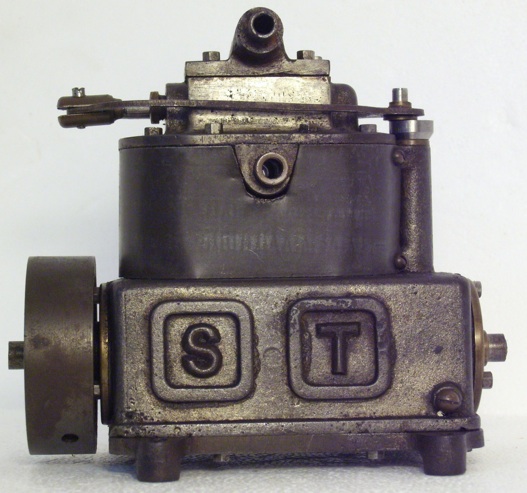

Figure 14 (top): The SunFigure 15 (above): The Sun
(Slide Valve Variant)(Piston Valve Variant)
The Sun was launched 1927 as the direct replacement of the No 1b MTB engine. It followed a similar design to the Star but was made of more traditional materials. The engine was designed for use with ordinary or flash steam boilers with no brass or gunmetal parts being subjected to superheated steam.
This engine has two in-line cylinders each of 0.75” bore and 0.75” stroke. Again, this was claimed to provide a perfectly balanced engine. The engine was available with a slide valve gear (see Figure 14) or piston valve gear (see Figure 15), apart from the valve gear cylinder head/valve chest casting all other parts were identical.
It is constructed from traditional materials, three or four iron castings (combined cylinder/crankcase, base plate with four integral mounting lugs and a combined cylinder head/steam chest (piston valve variant) or combined cylinder head/steam chest and cover (slide valve variant), steel crankshaft, valve gear and banjo eccentric strap. A 2” diameter, 0.625” thick steel disc wheel was provided as standard.
Lubrication was by ‘splash’ and a displacement lubricator was recommended for oiling the valve gear and pistons. The pistons were of light construction and had integral oil grooves which prevent the fitting of piston rings.
As a replacement for the No 1b MTB engine, this engine was designed for use as a single engine in a boat up to 4’ 6” in length or the use of two engines for twin screw boats up to 5’ 6” long (Class A). The design is compact being 4.75” long, 3” wide, 4” tall with a weight of 2 lb 9 oz.
The slide valve version of this engine was available as a set of castings and materials only.
The piston valve version was available as set of castings and materials, a complete set of parts fully machined with fixings or as a ready to run engine.
The slide valve variant of the Sun became a casualty of World War 2, by the time Stuarts had recovered after war work, this variant was dropped. The piston valve variant was no longer available as a finished engine. The Sun last appeared in the Stuart Models catalogue in 1989/90.
Figure 16 (next): The SunFigure 17 (below): The Sun
(Slide Valve Variant) from above (Piston Valve Variant) from above

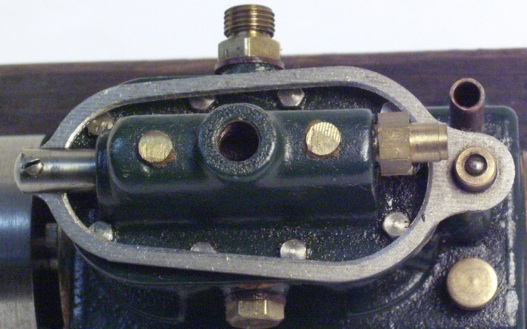
In Figures 16 and 17 the differences in the valve gear can be clearly seen, also shown is the banjo eccentric drive mechanism.
Stationary Use
Like the No 1b MTB, the Star and Sun could also be used in a stationary role, the table below provides details of the bedplates for all these engines.
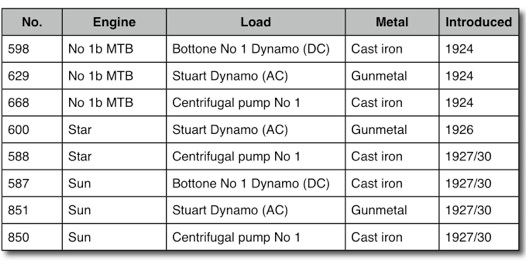
Bedplates were supplied fully machined, less fixing holes. Suitable couplings were available from around 1931.
Sirius
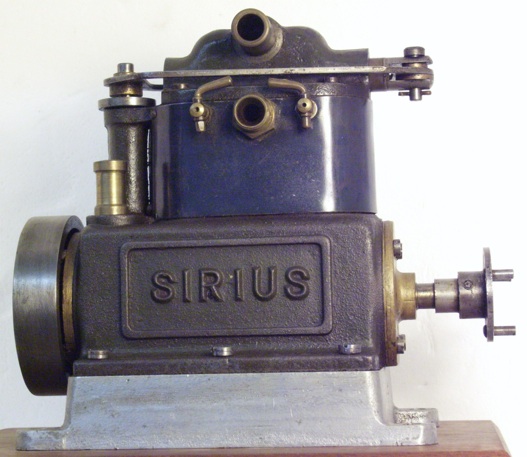
Figure 18: The Sirius
The Sirius was introduced in 1938 following the success of the Sun and the demand for a larger engine. It has a similar design to the Sun and was designed for use with ordinary or flash steam boiler or flash steam hydroplane racing. The valve gear and steam passages had been refined leading to greater power being developed with low steam consumption. It was capable of developing 0.4 BHP at 2800 rpm with, slightly superheated steam at 50 psi (this was revised to 80 psi in 1973).
This engine has two in-line cylinders each of 1” bore and 1” stroke. Each of the very light cast iron pistons were fitted with two piston rings. It is constructed from traditional materials, two cast iron castings (combined cylinder block/crankcase and steam chest), an aluminium base plate with four integral mounting lugs, steel crankshaft, valve gear and banjo eccentric strap. A 2.6875” diameter, 0.625” thick steel disc wheel was provided as standard.
Lubrication was by ‘splash’ and a displacement lubricator was recommended for oiling the valve gear and pistons.
The dimensions are 5” long, 4.25” wide, 6” tall with a weight of 6 lb 8 oz.
There can be little doubt that the Sirius has been used by members of the model boat community – they (the boats) must be a sight to behold! The Sirius has been used in a range of stationary uses. No cast bedplate was produced by Stuarts as WW2 had intervened.
The engine was available as a:
-
•set of castings and materials (to 2007/8),
-
•part machined set of parts (piston valve and valve chest) (to 1982)
-
•complete set of parts fully machined with fixings (to 1982)
-
•ready to run engine (to 1979)
The Sirius was reviewed in Model Engineer magazine in December 1938. A comment was made: “Where the machined cylinders are ordered, the bore is now finished by a special lapping process which produces a remarkably smooth and accurate bore.”
Most notable, the Sirius provided useful military service at the heart of the Alco Firefly Charging Set, but as they say, that’s another story!
By 2010, the Sirius had been dropped from the Stuart Models catalogue.
In summary, this range of engines provided long and useful service both for a range of model boats and in driving various stationary pumps and dynamos.
The No 1 MTB, because of short-comings in the valve drive gear, evolved into the No 1b MTB via the 180. In turn, this was replaced by the Sun which was later only available with a piston valve.
The No 1a The Featherweight, evolved into the Star which introduced modern manufacturing techniques and high production volumes to Stuarts. This was clearly very useful commercial lesson for them in other business lines including, high volume, high quality, pump production.
The No 3 MTB and stationary version had a relatively short life, probably not proving to be very popular engines. They were both replaced by the ubiquitous Sirius.
Author’s Note: I make no apologies for the state of the engines shown. They are included for illustrative purposes only and are awaiting restoration. There never seems to be enough hours in the week!
© Ray Nightingale 2011
High Speed Steam Engines, Edgar T Westbury, published in Model Engineer magazine, Volume 113, Issue 2841, pages 661 and 662, 3rd November 1955
The History of Model Power Boats, Edgar T Westbury, published by Percival Marshall & Co Ltd, London 1950
High Speed Steam Engines, Edgar T Westbury, published by Model Engineer magazine, Volume 113, Issue 2841, page 662, 3rd November 1955
Stuart Turner Catalogue, April 1926, page 54, published by Stuart Turner Ltd, Henley on Thames
New Tools and Supplies, published in Model Engineer magazine, Volume 79, Issue 1962, page 571, 15th December 1938