CRAFTSMAN OF THE YEAR 2015
William Robertson

CRAFTSMAN OF THE YEAR 2015
William Robertson


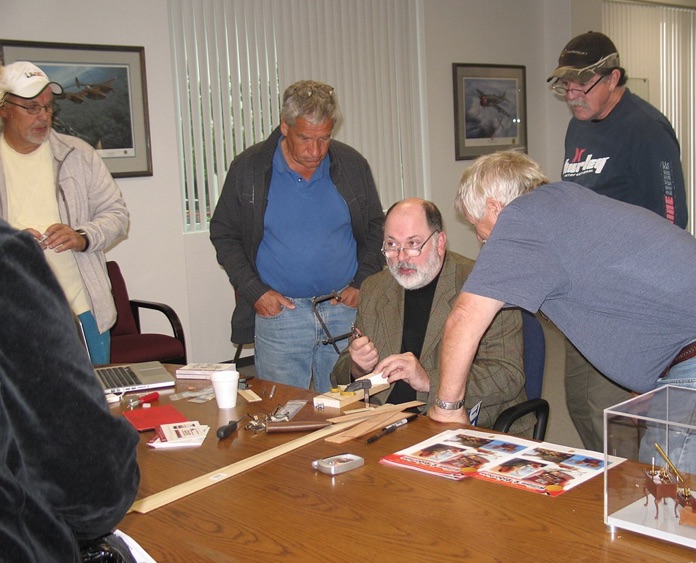
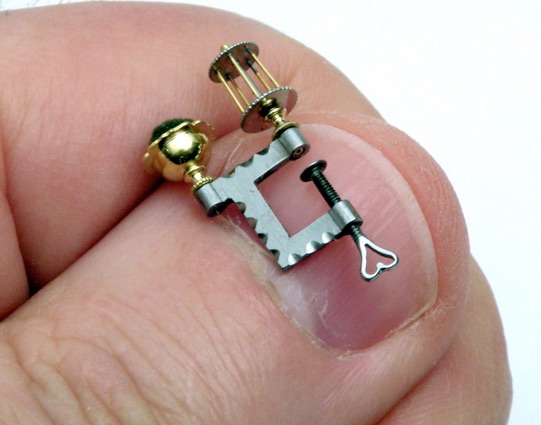
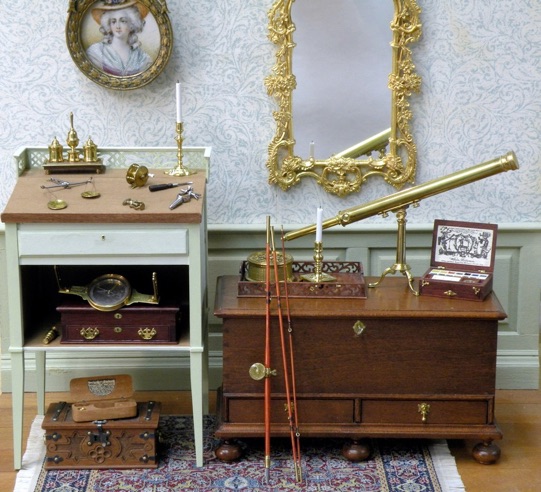
William Robertson is from the world of ‘miniatures’, reproducing furniture, scientific instruments, craftsman’s tools, etc, mostly in 1:12 scale. His work is some of the most highly sought after in the world. He has been making a living working full time at this since 1977. At auction some of his tiny pieces command prices in five figures.
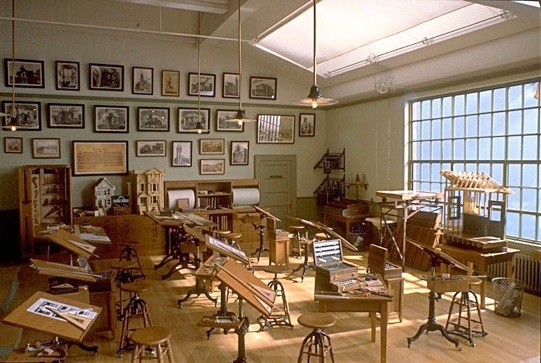
He works in both wood and metal and creates not only individual pieces but also complete rooms. His work has been displayed by institutions like the Smithsonian and the National Geographic Society. A large body of his work can be seen in the National Museum of Toys and Miniatures in his home town of Kansas City, Missouri. The display is one which he also helped design.
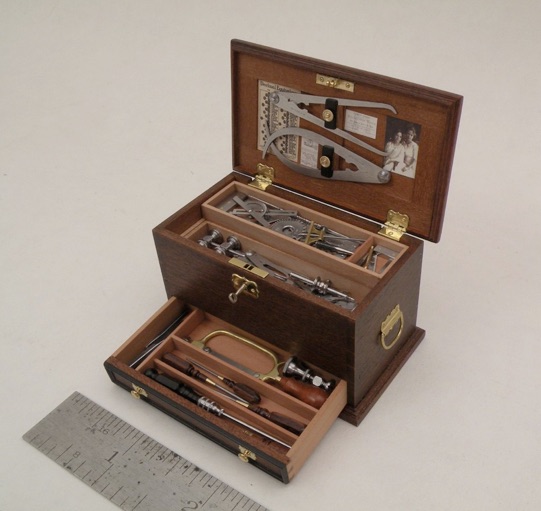
He does a lot of research into his subjects with the aim of having every detail historically correct in addition to being represented to perfection down to the tiny working lock and key on a tool chest.
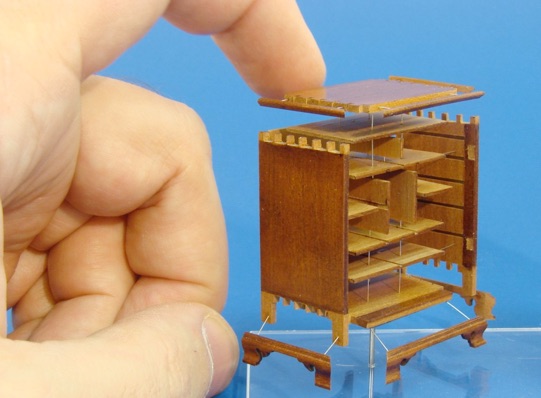
His work has now been rewarded by being named Craftsman of the Year for 2015 by the Joe Martin Foundation and the Craftsmanship Museum. Each year the Joe Martin Foundation selects one person as the outstanding metalworking craftsman. An award of $2000 plus a plaque and engraved medallion is presented to the winner. While at the museum (photo above) to accept the award he spent the day talking with visitors, explaining his techniques and demonstrating the art of cutting tiny dovetails for wooden drawers. He is the 19th winner of the award.
At 1/12 scale, the advantages of power tools are minimized and the precision of hand tools is often called for. Power tools are good at removing large amounts of material rapidly, but the delicate control provided by fine hand tools or small precision power tools is usually what is called for with extremely small and detailed parts. He makes small metal parts on a lathe, and grinds his own tiny router bits in order to make up scale mouldings, but as he notes while working with one of his small hand planes: “A scale plane takes a scale shaving.”
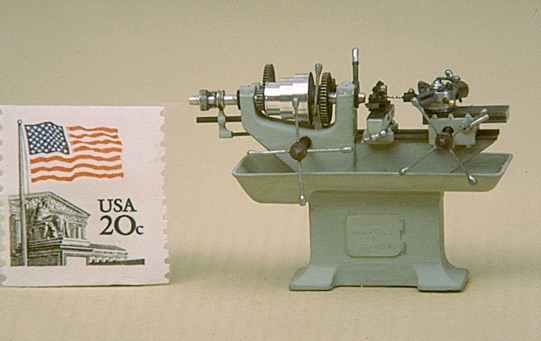
He has a rose engine ornamental turning lathe and is a big fan of Rivett lathes, but like his work, most of his tools are small. The one full-size tool project he took on was to reproduce a large and historically accurate drill press for a display in a replica of Wilber Wright’s workshop. It was a pretty massive piece, especially compared to his usual scale.
It turned out well, but in describing the project he later said, “What was I thinking?” Obviously, smaller is better in Mr. Robertson’s workshop. What all his tools have in common, though, is quality.
Just like Cherry Hill, Mr Robertson notes that the process starts with the study and research of the original object. “It is important to understand the ways, tools and methods used by the original craftsman.” From there he goes on to note the next challenge is to select the correct materials that represent the grain and colour of the original in miniature. Next is the reducing of the parts to scale size, a process that involves both mechanics and artistic interpretation. Some of the smaller parts can be extremely challenging just due to the physics involved. Keep in mind that 1/12 scale means a cubic volume reduction that is 1/12 as wide times 1/12 as long times 1/12 as high or 1/1728th of the original part volume.
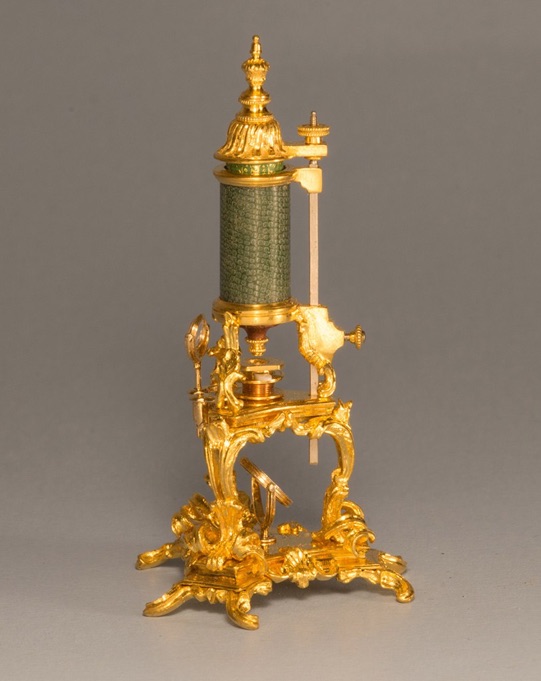
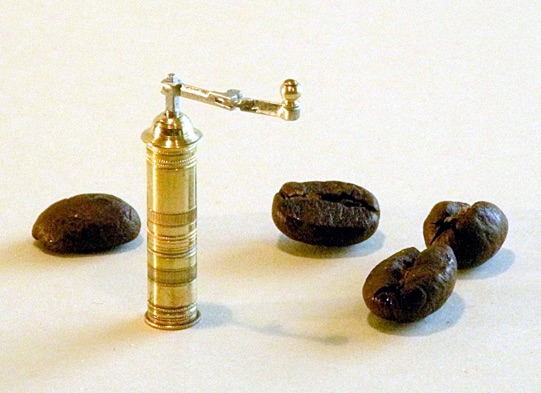
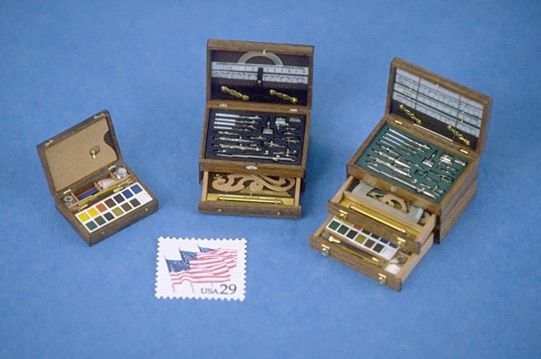
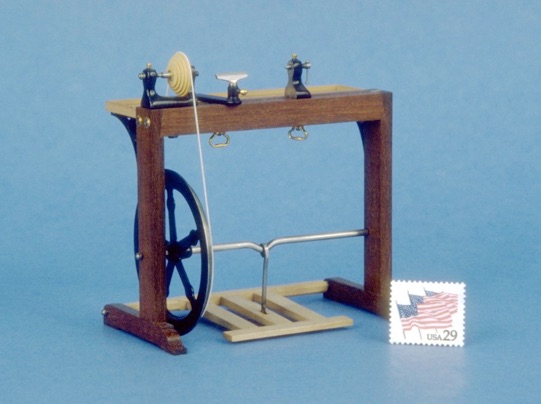
Here are some of his projects:
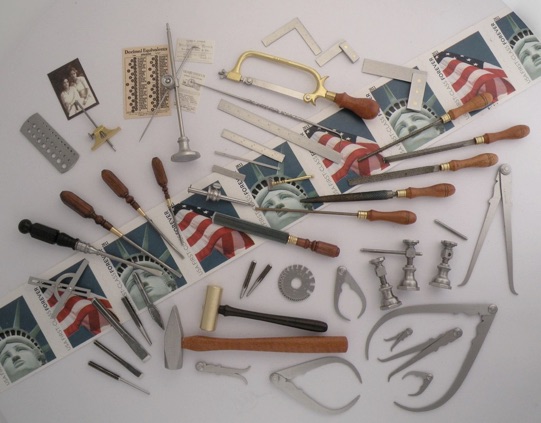
1/8th scale Machinist's Chest circa 1880, with working tools. On a more personal note, the miniature photo of the two women in the lid of the toolbox is made from an old photo of two relatives.
MEWS IS SPONSORED BY - CHRONOS - PAULTHECAD.CO.UK - ECCENTRIC ENGINEERING - WARCO - BRISTOL EXHIBITION - HARROGATE EXHIBITION - MERIDIENNE EXHIBITIONS - LYNX MODELS - CAMDEN MINIATURE STEAM - TRANSWAVE CONVERTERS - MESSE SINSHEIM -
Editor - David Carpenter