BENSON LATHE RECONDITIONING
By Neil Baker



BENSON LATHE RECONDITIONING
By Neil Baker


To resurrect a steam roller that had been in a scrap yard for 25 years many parts need to be made. I was looking around for a lathe, a Myford for preference, but as funds were short I couldn’t afford one! The opportunity to buy a small machine cropped up and I agreed to buy it, knowing it would not be in pristine condition. That was back in 1980.
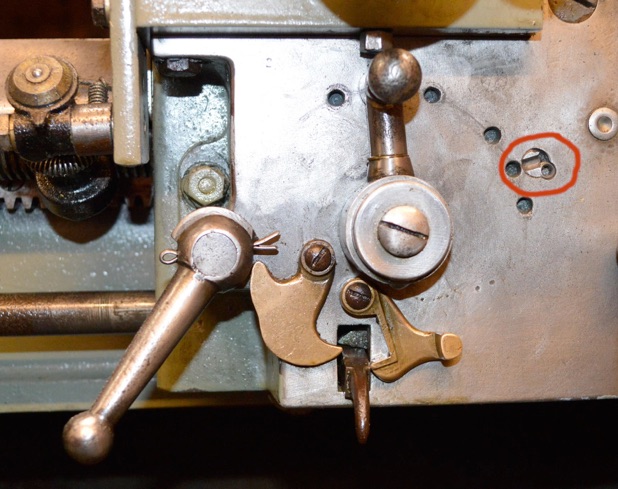
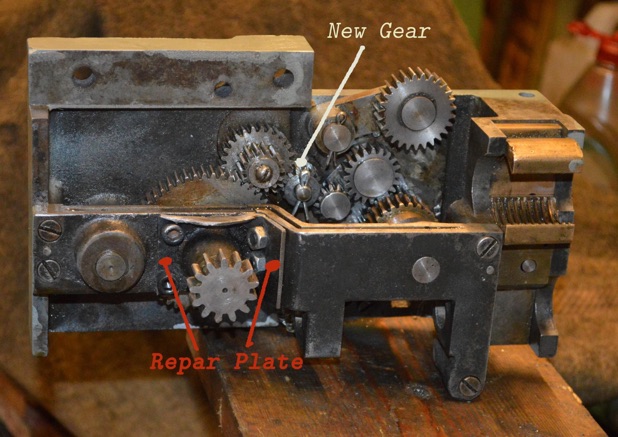
On getting it home, we found it looked as though it had been left out in the rain some time ago, despite a coating of black preservative ‘gunge’. It was also nearly impossible to move the saddle. On removing the saddle we found this was due to a gear in the feed train (in the saddle apron) being displaced, its pivot being loose. This gear, made of aluminium, was discarded along with its pivot.
The good news: there was a set of collets that fitted into the spindle nose, but the drawbar was missing. There was a 3-jaw chuck that was badly ‘bell mouthed’. This was (sort of) fixed by mounting an electric pistol drill with a small grinding wheel in its chuck on the saddle.
There was also a faceplate and about 30 change wheels. Amazingly the electric motor and starter worked, although the centrifugal contact for the starting winding was worn out. A modification of the starter connections eliminated the need for the contact. A Myford chasing dial, was added (the leadscrew is 8TPI) and better spindle lubricators.

Time rolled on, and I got a 71/2” Colchester Triumph lathe which was useful for maintenance of the steam rollers. But the small lathe was still really handy for smaller jobs. Now an apprentice model engineer, I began to think about replacing the little lathe with a ‘proper’ Myford. I found http://www.lathes.co.uk/ on the net and emailed that I was interested in an ML or super7. By email Tony@lathes.co.uk talked me out of this, as in his opinion the Benson is a very high class machine and was worth persevering with. (See also http://www.mpmengineering.co.uk/html/lathes_9.html). So I decided the much cheaper option of reconditioning the Benson was the way to go.
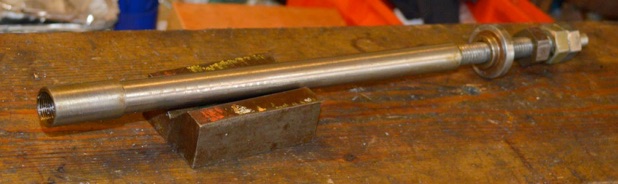

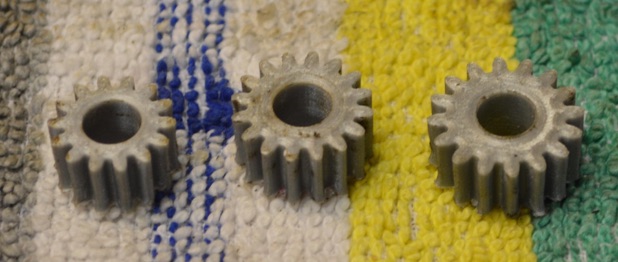
While this was going on I decided to get all of the feeds working again. The cross feed worked OK, but due to the missing gear the saddle feed didn’t. The support casting at the rear of the apron assembly was also broken. This fitted so well that this problem was not noticed until it was cleaned. A repair bracket was made and fitted. A new gear and pivot were needed. All I knew about gears is that they mesh.
I had bought a replacement 3-jaw chuck at our last Bristol Exhibition, so the first job was to machine the 3-jaw backplate to take the replacement one. This was done in situ and the ‘new’ chuck has already been used. (Fig 7).
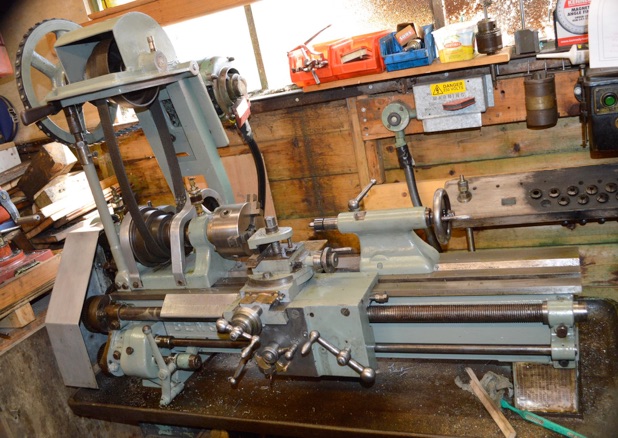
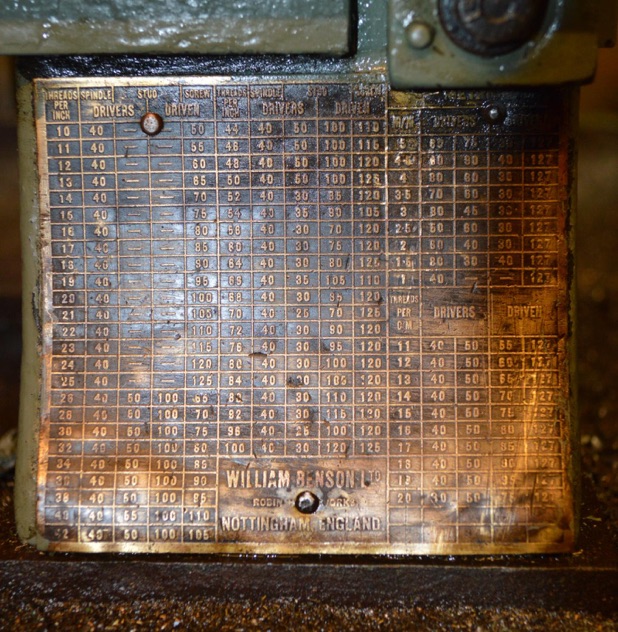
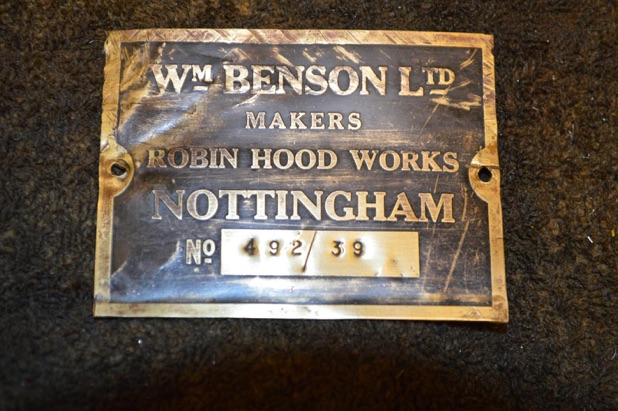
Fig 8 is the change wheel chart riveted to the bed rear leg and Fig 9 is the maker’s plate, sadly damaged when removing the saddle the first time.





Modelengineeringwebsite.com
the only free and the only weekly magazine for model engineers.
Editor: David Carpenter