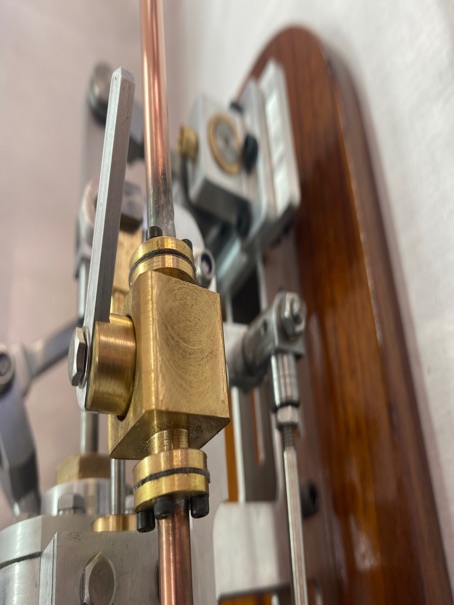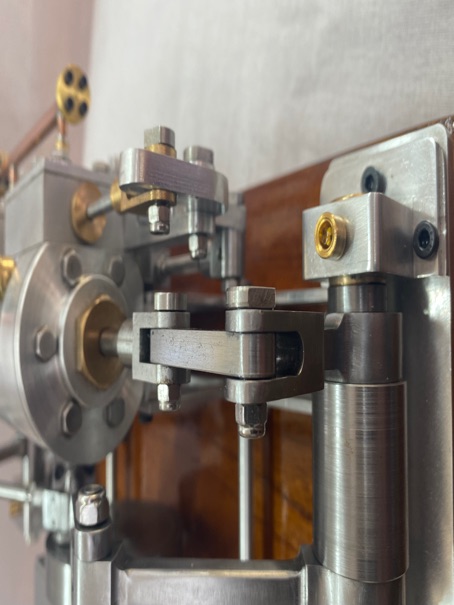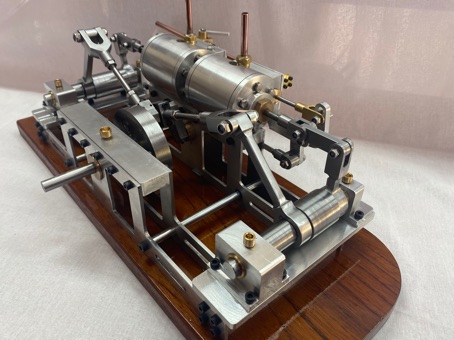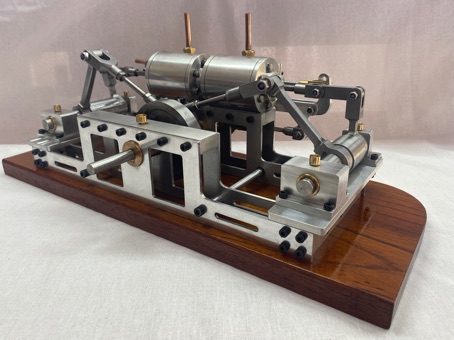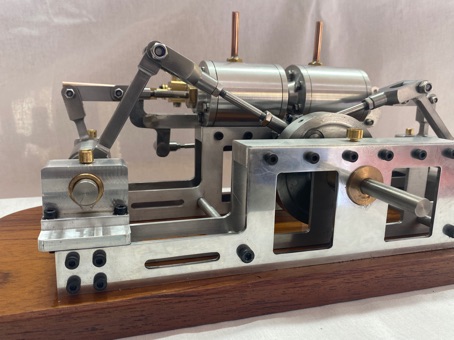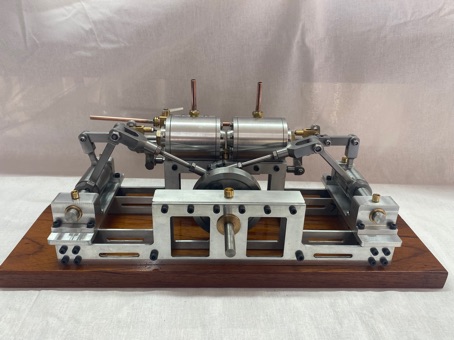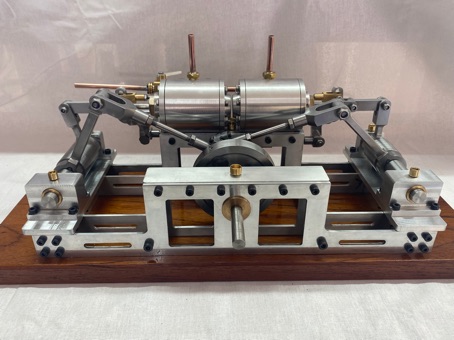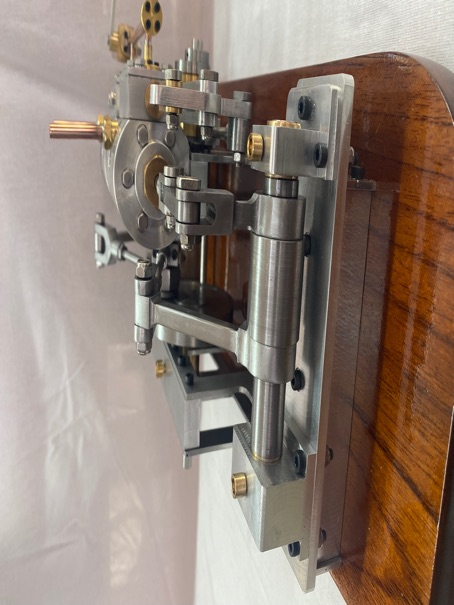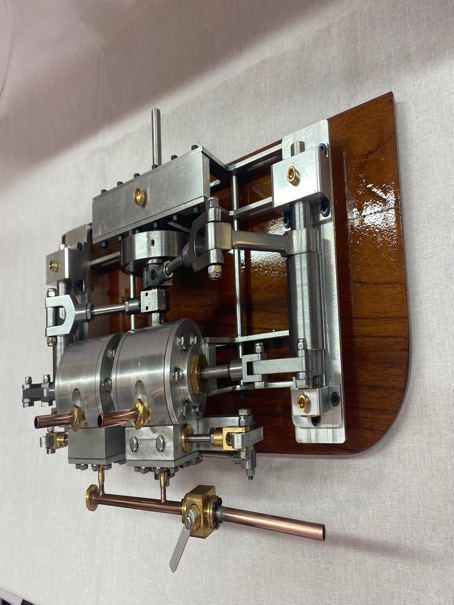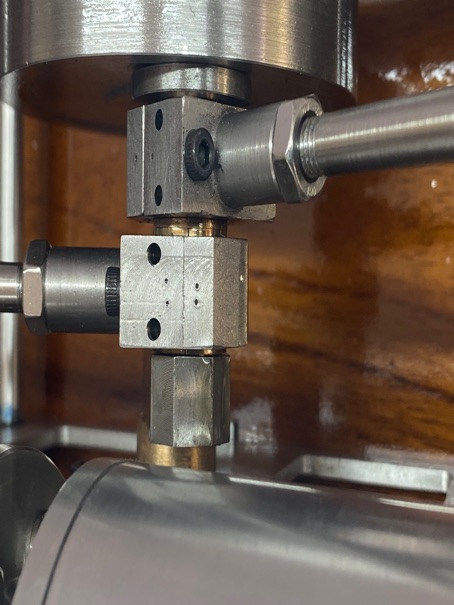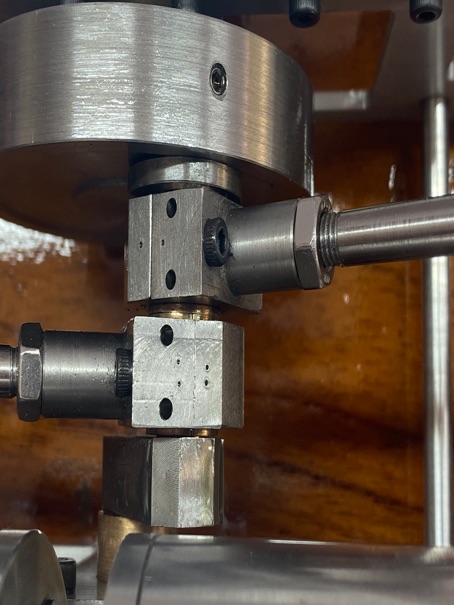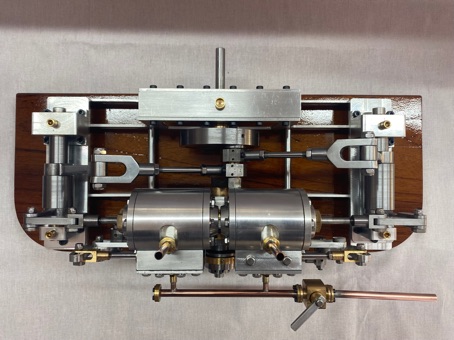

A couple of years ago I discovered your great website and it has been an inspiration to me. So much so that I went ahead and purchased a small lathe and mill prior to retiring.
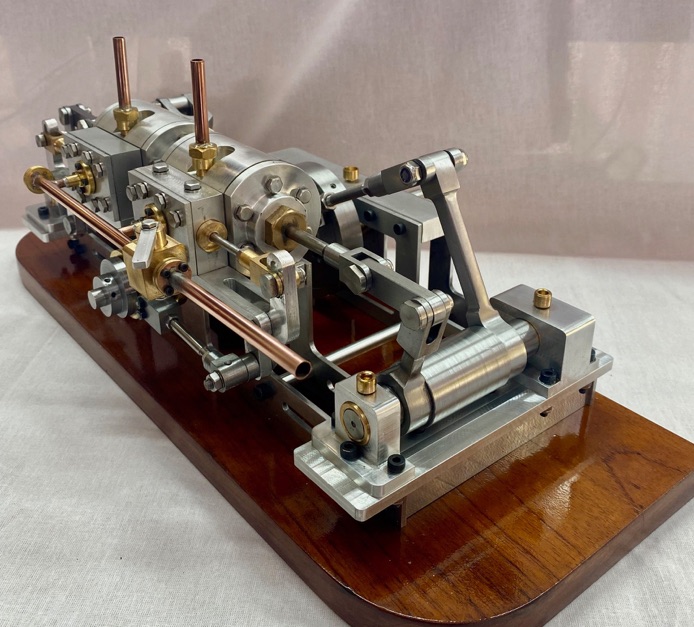
As a new starter to model engineering I thought that the Monitor engine drawings from Julius would be a good start for me. Over the last year and a half I have gradually worked through making each component and finally completed the assembly last week. I have attached a video of the engine running on air. The significant hissing is coming from my control valve I made up, now resolved with a better fitting O ring, plus the pistons do not yet have piston rings. I just couldn’t wait to see if it would run anyway. Pretty happy with the overall result, I didn’t have to bin too many components and I took those mistakes as lessons.
Thank you for the inspiration and to Julius for the easy to follow plans.
Stuart
Gold Coast Australia
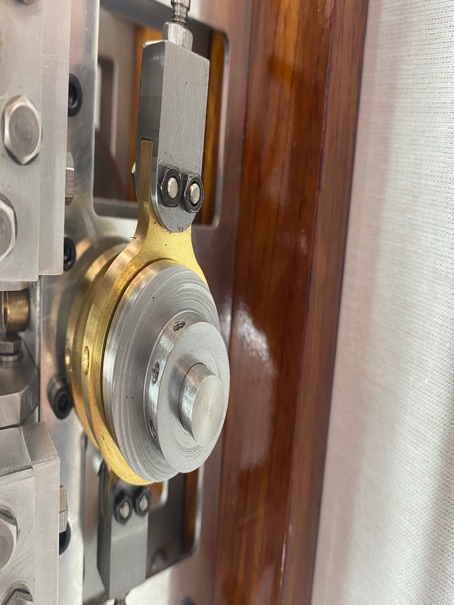
Stuart also kindly sent us the following photos of his completed model and its build (build photos next time).
The USS Monitor was an ‘ironclad’ steam ship which famously saw service in the Civil War in the early 1860s. The ship's engine was designed by John Ericsson as a "vibrating side-lever engine." He had created similar engines before and decided to use the design again because of its advantage for a small, low-riding warship.
Most steam engines of the time had vertical pistons, which occupied a lot of space and made them vulnerable to enemy fire because they were partially above the waterline. In contrast, the Monitor's 30-ton, 400 horsepower engine had pistons that moved horizontally, which reduced the height of the engine and allowed it to be mounted below the waterline.
Although a successful fighting ship the Monitor was not stable in rough seas due to its formidable rotating turret and sank in the early hours of January 1, 1863.
The engine was recovered from the Monitor's wreck site in 2001. It is now resting upside-down in an alkaline solution to inhibit corrosion. Over the coming years, conservators will continue to clean and separate the many different pieces of the engine to preserve them properly.
The first model Monitor was shown at Harrogate in 2014 by Brian Stephenson to the design of Bob Middleton. It was built without castings, like Bob’s other designs. Julius de Waal has produced CAD drawings for both metric and imperial (see here) versions. Drawings can be downloaded for personal use only.
Vince cutajar’s full build description can be found here